


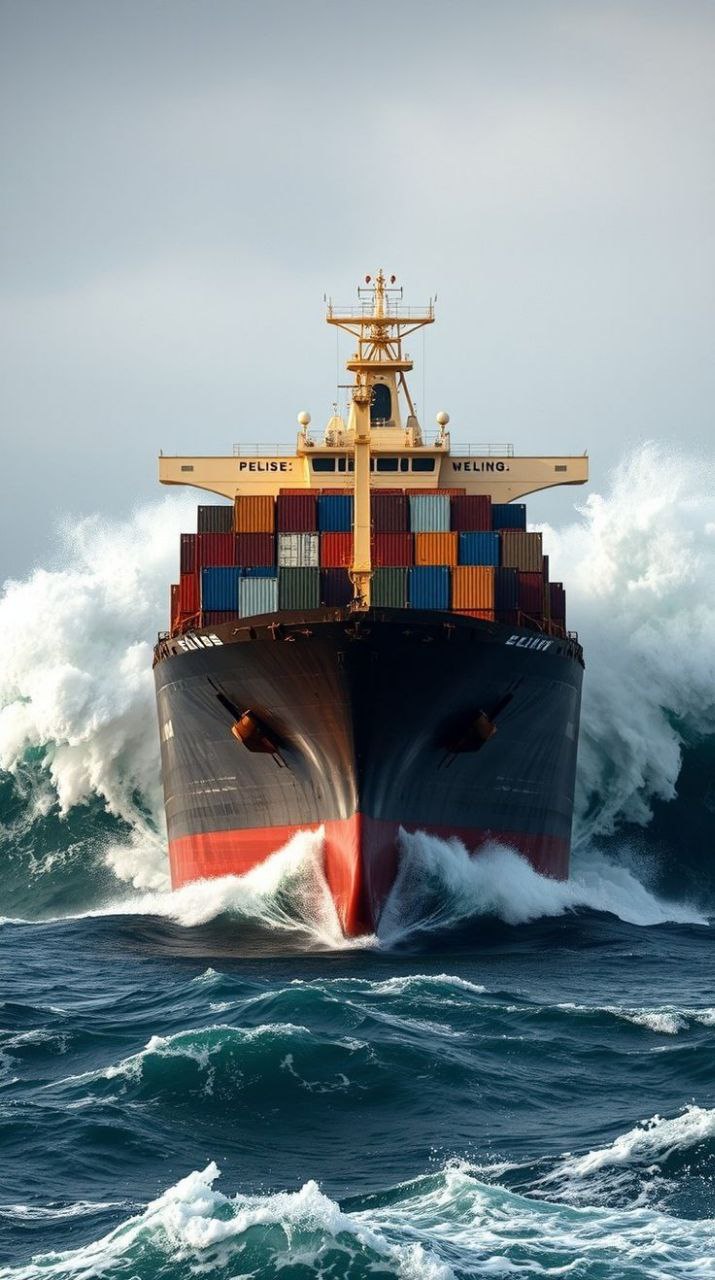
The Future of Maritime Transportation: Innovation, Sustainability, and Global Connectivity.
Maritime transportation has long stood as the backbone of global commerce, connecting continents and enabling the movement of essential goods. Today, more than 80% of global trade is carried by sea, highlighting the critical importance of the shipping industry in sustaining the global economy. As international markets expand and supply chains grow more complex, the maritime sector is experiencing rapid transformation driven by emerging technologies, environmental regulations, and advanced logistics strategies.
1. Innovation at Sea Digitalization is revolutionizing maritime operations. Modern vessels are equipped with smart navigation systems, satellite-based tracking, and AI-driven route optimization tools that improve voyage efficiency while enhancing safety at sea. These systems allow captains and fleet managers to avoid severe weather, reduce fuel consumption, and optimize delivery times. Advanced sensors and real-time monitoring tools enable predictive maintenance, identifying potential mechanical issues before they escalate. This minimizes downtime, lowers operational costs, and ensures vessels remain in peak performance condition. Autonomous shipping represents the next major breakthrough in maritime innovation. Though still under development, autonomous and semi-autonomous vessels are being tested around the world. These ships integrate radar, lidar, machine learning, and remote-control technologies to navigate oceans with minimal human involvement. As global regulations evolve and technology matures, autonomous vessels are expected to enhance safety, reduce human error, and streamline international shipping operations.
2. Sustainability and Environmental Responsibility Environmental awareness is reshaping the future of maritime transportation. With stricter international regulations—such as IMO 2020 and upcoming decarbonization targets—shipping companies are investing heavily in greener technologies and sustainable practices. Cleaner fuels such as LNG, methanol, and future hydrogen-based solutions are becoming more widely adopted. Hybrid propulsion systems and battery-powered ships are also being explored to reduce carbon emissions and support eco-friendly operations. Ports around the world are transitioning into “green ports,” offering: Shore-to-ship power to reduce fuel usage while docked Advanced waste-management and recycling systems Energy-efficient cargo handling equipment Automated logistics platforms to reduce congestion and delays Additionally, innovative vessel designs—such as air lubrication systems, optimized hull shapes, and wind-assisted propulsion—contribute significantly to reducing fuel consumption, emissions, and overall environmental footprint.
3. Strengthening Global Connectivity Maritime transportation connects global supply chains, ensuring that industries—from manufacturing to agriculture—operate smoothly. As e-commerce expands and customer expectations shift toward faster delivery, the demand for efficient maritime logistics is increasing. Shipping companies are adopting integrated digital platforms that provide: Real-time cargo tracking Automated documentation and customs processing Enhanced communication between ship, port, and customer End-to-end visibility across the entire supply chain Emerging trade routes are also transforming global logistics. Melting Arctic ice, for example, is opening shorter northern passages, reducing travel distances between Asia, Europe, and North America. Investments in canal expansion, port upgrades, and intermodal transport corridors further enhance global connectivity and allow shipping companies to offer faster, more cost-effective services.
4. The Role of Modern Shipping Companies
In this dynamic landscape, shipping companies must continuously evolve to remain competitive. The most successful organizations are those that embrace innovation, invest in sustainability, and place customer satisfaction at the center of their strategies. Key areas of focus include: Digital transformation and fleet modernization Adoption of low-emission technologies Investment in workforce training and safety programs Strengthening global partnerships and trade networks Enhancing cargo security and supply-chain transparency Whether transporting containers, bulk commodities, energy resources, or specialized project cargo, the mission remains unchanged: to deliver goods safely, efficiently, and sustainably—across every ocean and every port worldwide. As the world becomes increasingly interconnected, maritime transportation will continue to serve as a vital bridge between nations, industries, and communities. Companies that adapt today will define the future of shipping tomorrow.
Comments (0)
Leave a Comment
No comments yet. Be the first to comment!